
By Shalinie Gill, Co-founder • MRG Evennts
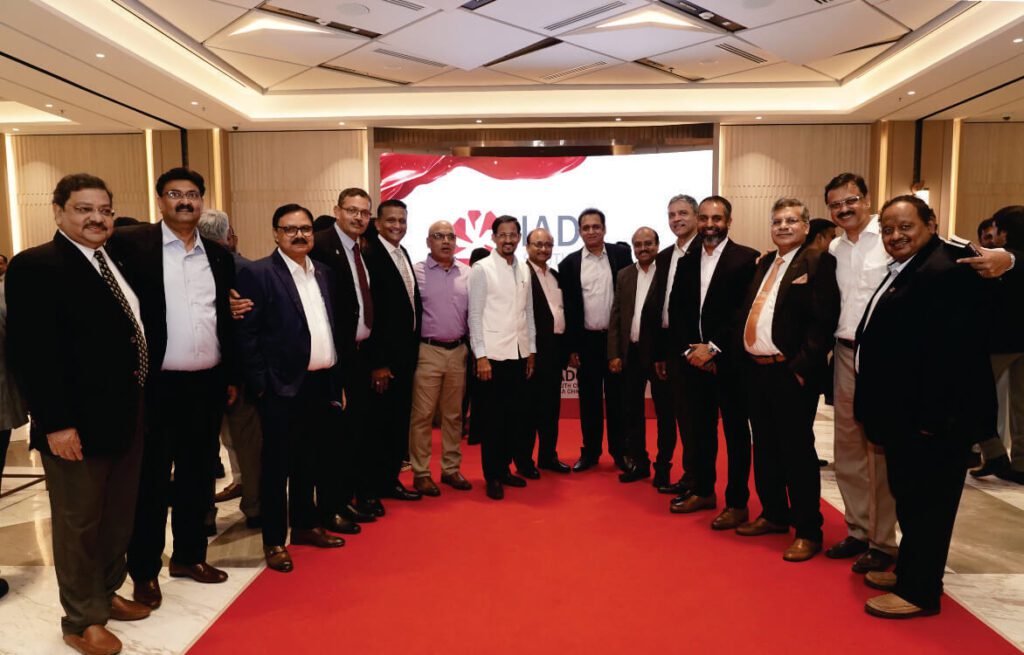
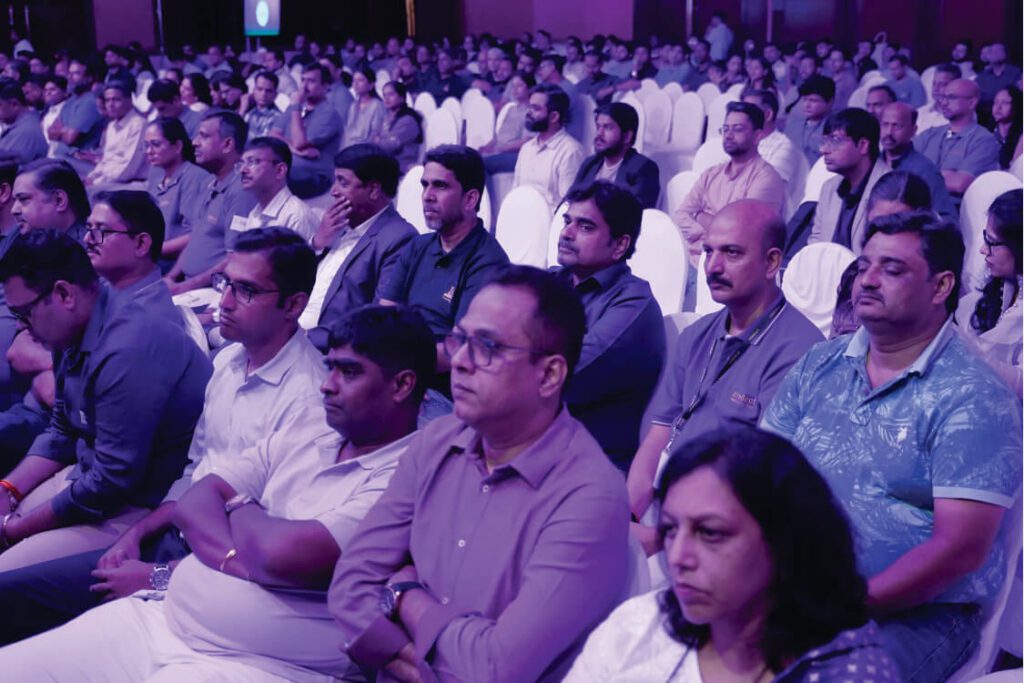
A dealer meet is one of the highest-stakes events in a B2B company’s annual calendar. It’s where 300-700 of your most important channel partners gather in one room — the people who actually carry your product to market. Get it right, and you walk away with renewed commitment, clear targets, and the kind of partner energy that drives the next fiscal year. Get it wrong, and you’ve spent ₹30-80 lakh on a missed opportunity.
After delivering dealer meets across automotive, building materials, FMCG, industrial, and shipping sectors — MRG Evennts has executed enough of these events to recognise the patterns that separate strong dealer meets from forgettable ones. This is the operational playbook we use, written for Heads of Sales, Channel Marketing Managers, and Admin Heads planning their next dealer event in Mumbai or across India in 2026.
Whether you’re planning a 1-day Mumbai-based dealer meet, a 2-day event with overnight stays, or a destination dealer meet in Goa or Thailand — this guide covers what works, what doesn’t, and what it realistically costs.
| Typical Attendee Size | 300–700 dealers and channel partners (we manage 100 to 1,500+) |
| Common Format | 1-day Mumbai event (most common) or 2-day with overnight stay |
| Cost Range | ₹20 Lakh to ₹1.5 Crore+ depending on scale, venue, and entertainment |
| Typical Duration | 6-8 hours for 1-day events; 1.5-2 days for destination formats |
| Planning Lead Time | 10-14 weeks for 500+ attendees; 6-10 weeks for smaller events |
| Peak Season | January-March (FY closing) and October-November (post-Diwali) |
| Key Components | Business sessions, awards/recognition, entertainment, hospitality, gifting |
| Industries Served | Automotive, building materials, FMCG, industrial, shipping, electronics, BFSI |
| Mumbai Venues Used | Jio World, Taj Lands End, Sahara Star, Renaissance Powai, ITC Maratha, JW Marriott |
| Destination Options | Goa, Thailand (Phuket, Bangkok), Lonavala, Khandala for short offsites |
Why Dealer Meets Matter More Than Other Corporate Events
Dealer meets are different from internal corporate events for one critical reason: the audience doesn’t work for you. They’re independent business owners who choose, every year, to keep selling your products. Without their commitment, your brand’s market access weakens.
That changes the entire planning calculus. An employee event can absorb a small misstep — the employees still come to work the next day. A dealer meet cannot. If your most valuable channel partner feels disrespected, under-recognised, or insulted by an inexpensive venue or thin hospitality, you lose business, and competitors notice.
The strongest dealer meets achieve three things simultaneously:
1. Renewed commitment. Partners leave feeling that your company is investing in them, taking them seriously, and worth continued loyalty for the year ahead.
2. Clear strategic alignment. New product launches, target updates, channel policies, and competitive positioning are communicated in person — far more effectively than email or video calls.
3. Personal recognition. Top-performing dealers feel publicly celebrated. This is the single most underweighted element in most dealer meets — and the one with the highest return on emotional investment.
When all three happen in one event, the dealer meet pays for itself many times over in the fiscal year that follows. When even one is missed, the event becomes an expensive memory rather than a business driver.
Types of Dealer Meets and Channel Partner Events
Not every dealer event is the same. Understanding the format that matches your objective helps shape budget, agenda, and venue choice. Below are the four most common formats MRG Evennts delivers for Indian corporates.
Annual Dealer Conference
The flagship event of the year — full review of the past year, FY targets, new product or policy announcements, awards, and partner recognition. Held once annually, typically at fiscal year start (April) or post-Diwali (November).
Format: 1-day Mumbai or 2-day with overnight stay · Size: 300-700 attendees
Channel Partner Meet
Focused on a specific channel — typically distributors, wholesalers, or large retail partners. Smaller and more relationship-focused than the annual conference. Often used to address segment-specific business issues or new programmes.
Format: 1-day intensive · Size: 100-400 attendees
Destination Dealer Meet
An incentive trip framed as a dealer event — top performers earn the right to attend. Mix of business sessions and leisure programming. Most often hosted in Goa, Phuket, or Bangkok for Indian companies. Premium positioning, premium budgets.
Format: 2-4 day destination · Size: 100-300 attendees
Regional / Zonal Dealer Meet
Multi-city rollout — same agenda executed across 4-6 Indian cities (typically Mumbai, Delhi, Bangalore, Chennai, Kolkata, Hyderabad) over 4-8 weeks. Closer to dealers geographically, smaller per-event scale, broader total reach.
Format: 1-day events across multiple cities · Size: 100-250 per city
Choosing the Right Format for Your Dealer Meet
The format you choose shapes everything that follows — budget, venue, agenda, partner perception. Most dealer meets fail not because of execution mistakes, but because the wrong format was chosen for the business objective. Here is how the three most common formats actually compare.
| 1-Day Mumbai Event | 2-Day with Overnight | Destination Event | |
|---|---|---|---|
| Best for | Annual updates, recognition, agenda-led meets | Deeper engagement, strategy sessions, premium partners | Top-performer incentives, premium positioning, brand reset |
| Attendee size | 300–700 typically | 200–500 typically | 100–300 typically |
| Cost range | ₹20–60 Lakh | ₹40 Lakh–1 Crore | ₹80 Lakh–3 Crore+ |
| Lead time | 8–12 weeks | 12–16 weeks | 16–24 weeks |
| Typical venue | Jio World, Taj Lands End, Sahara Star, Renaissance Powai | Resort hotels with conference facilities in or near Mumbai | Goa beach resorts, Phuket, Bangkok, occasionally Dubai |
| Travel logistics | Dealer self-arranged or company transport in Mumbai | Hotel block bookings, transport coordination | Visas, flights, hotels, ground transport — full handling |
| Partner perception | Standard professional event | Significant investment, valued partnership signal | Premium experience, top-tier recognition |
| Strongest fit | Annual conference, channel partner meet | Strategic alignment, new product training | Incentive trip, awards weekend, milestone celebration |
The honest format-selection rule
If you are running a regular annual update with limited new content, the 1-day Mumbai format is almost always correct. Anything longer becomes self-indulgent and wastes dealer time.
If you are launching a major new product, restructuring the channel programme, or recognising top performers in a way that needs to feel premium, the 2-day or destination format earns its higher cost.
The most expensive mistake we see: companies booking a destination event because competitors did, without a clear business reason. Dealers see through this, and the event delivers below its cost.
Best Venues in Mumbai for Dealer Meets
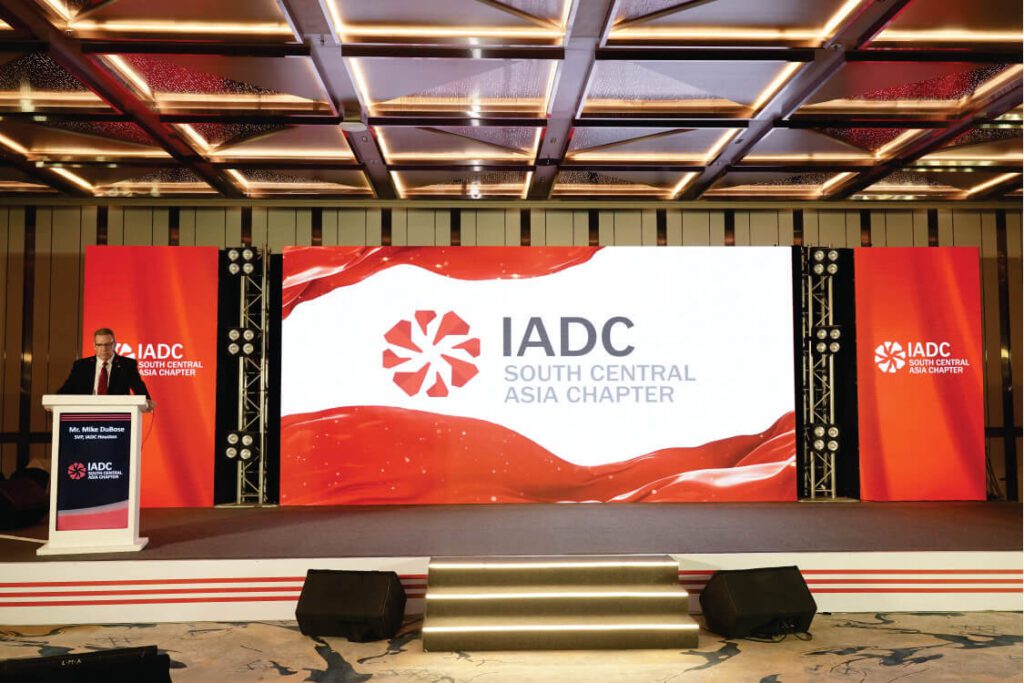
Mumbai venue selection for dealer meets is different from venue selection for any other corporate event. Three criteria matter more than usual: ballroom capacity for the awards segment, separate breakout space for business sessions, and an entrance lobby/registration area that can absorb 500+ dealers arriving in a 60-minute window without chaos.
Based on MRG Evennts’ experience executing dealer meets across Mumbai, here are the venue categories that consistently work, with examples of each.
Premium convention venues (for 500+ attendees)
When the dealer meet is large and the brand wants premium positioning, purpose-built convention venues are the right choice. Jio World Convention Centre in BKC handles dealer meets up to 2,500 attendees with full A/V capability, integrated registration zones, and dedicated breakout rooms. The space itself communicates that the company is taking its dealers seriously.
Five-star hotel ballrooms (for 300-700 attendees)
For mid-to-large dealer meets, premium hotel ballrooms strike the right balance between scale and hospitality. Taj Lands End at Bandra, Sahara Star at Vile Parle, ITC Maratha near the airport, Renaissance Mumbai Powai, and JW Marriott Mumbai Juhu all work well. Each has the ballroom capacity, A/V infrastructure, and F&B operation needed for full-day events with awards segments and dinner.
Convention-and-hotel combinations (for 2-day events)
When you need conference space plus on-site overnight accommodation, properties like Renaissance Mumbai Powai (which has both convention scale and hotel rooms on-site) eliminate the transport headache of moving 400+ dealers between separate venues. The Powai location also doubles as a destination feel without leaving Mumbai.
Sector-suited specialist venues
For some industries, the venue choice itself communicates brand alignment. Automotive dealer meets often work well at venues with outdoor display space (for vehicle reveals). Industrial and engineering dealer meets fit comfortably at convention-grade venues with the breakout depth needed for technical sessions. Building materials and tile companies often want venues that allow brand display setups in the lobby.
For detailed venue listings with capacities, key halls, and our notes on which works best for what scale and purpose — see our complete guide to Mumbai corporate event venues
Offsite Dealer Meets and Short-Distance Destination Options
Some dealer meets work best when they leave the city — even briefly. Moving 200-400 partners out of their daily work environment changes the energy of the event. Conversations get deeper, recognition feels more genuine, and the time spent together has weight that a typical city event cannot quite match.
That said, an “offsite” dealer meet is not automatically better than a Mumbai event. The question is whether the time, cost, and complexity earn their return. For most dealer meets — annual conferences, channel partner updates, awards events — a strong 1-day Mumbai event delivers more effectively than a stretched 2-day offsite that fills time without adding value.
When an offsite format is the right choice, here are the realistic options:
1-night offsite at premium resorts near Mumbai
The most accessible offsite format. Resort properties in Lonavala, Khandala, and Khopoli (2-3 hour drive from Mumbai) offer conference facilities, accommodation, and a clear change-of-scene without the complexity of long-haul travel. Suitable for 150-400 attendees, 1-night format, ₹35-80 lakh range. Best for dealer meets where the goal is deeper conversation, strategic alignment, or premium partner experience without a full destination commitment.
Goa for premium positioning
Goa is the most common true-destination choice for Indian dealer meets. It offers the foreign-vacation feel without visa complexity, with established premium hotel infrastructure. Format typically runs 2-3 nights. Suited for 100-250 attendees at ₹1-2.5 Crore budget ranges. Best for top-performer incentive events, awards weekends, or milestone celebrations where the company wants to make a significant recognition statement to its highest-value partners.
International destinations: Thailand, Sri Lanka, Dubai
For top-tier dealer recognition events with premium budgets, international destinations carry the strongest signal. Phuket and Bangkok in Thailand, Colombo and Bentota in Sri Lanka, Dubai for luxury positioning. These events typically involve 100-200 attendees, 3-4 night formats, and budgets ₹1.5-4 Crore+. They are not the right choice for routine annual dealer meets — they are the choice when the company wants to materially differentiate how it recognises its most valuable channel partners.
The honest format-distance trade-off
The further the destination, the more the cost and complexity grow — but the recognition value does not always scale proportionately. A well-executed 1-night Lonavala offsite for 300 dealers can carry as much partner-trust value as a poorly-executed Goa event, at a fraction of the cost. The destination is not the differentiator; what happens once the partners arrive is.
MRG Evennts works with companies on dealer meet planning across formats — from 1-day Mumbai events to multi-day offsites. The right choice depends entirely on what the company is trying to achieve, the dealer profile, and the realistic budget. We will recommend the format that fits the business goal, not the one that maximises event spend.
Building the Right Agenda for a Dealer Meet
The agenda is where most dealer meets quietly fail. Too much management airtime, not enough partner recognition. Too many product slides, not enough genuine dialogue. By 4 PM the energy is gone, and the awards segment that should be the highlight becomes an obligation everyone wants to finish. A strong dealer meet agenda manages energy as carefully as it manages content.
The 40-30-30 principle. A successful dealer meet agenda allocates roughly 40% of time to business content (year review, strategy, new products), 30% to recognition and awards, and 30% to relationship-building (food, entertainment, informal interaction). When any of these drops below 20%, the event feels incomplete. When any goes above 50%, dealers feel manipulated.
Here is a typical agenda structure for a 1-day Mumbai dealer meet that consistently works:
Registration, Welcome Tea, and Networking
Dealers arrive, collect welcome kits, meet other partners, photograph at the branded backdrop. This hour is critical — it sets the tone and lets partners settle before formal sessions. Under-investing here makes the rest of the day feel rushed.
Opening Address and Year-in-Review
CEO or business head welcome, brief reflection on the past year, acknowledgment of channel partnership. Keep this under 30 minutes total. Dealer audiences resist long management speeches early in the day.
Business Strategy and New Product Announcements
The serious business content — new product launches, strategy updates, channel programme changes, target setting. Break this into 2-3 segments with 10-minute interactive breaks if possible. Use video and demonstrations, not slide-heavy presentations.
Open Q&A or Dealer Panel
Often skipped — and a mistake. A live Q&A or short panel with senior dealers signals that the company is willing to listen, not just broadcast. Even 30 minutes here transforms the perceived tone of the entire event.
Lunch and Networking
Premium hospitality. This is where dealers form impressions about the company's regard for them. Live counters, multi-cuisine, accommodating dietary needs (Jain, vegan, regional preferences) without fuss. Senior management should circulate, not group together at one table.
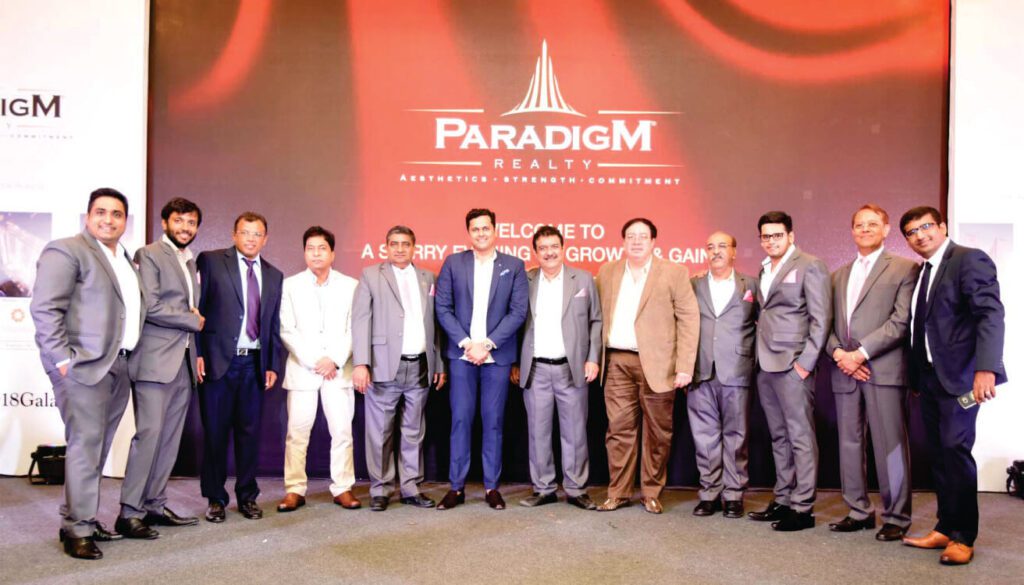
Recognition and Awards (Primary Block)
The emotional centre of the event. Categories like Top Performer, Highest Growth, Best New Dealer, Long-Standing Partnership, Region-specific awards. Build this segment carefully — every dealer who wins should feel seen, every award should feel earned, every photograph should be print-quality. Detail covered separately in the next section.
Tea Break and Photographs
Award winners pose with management. Tea, snacks, conversation. This break is where th
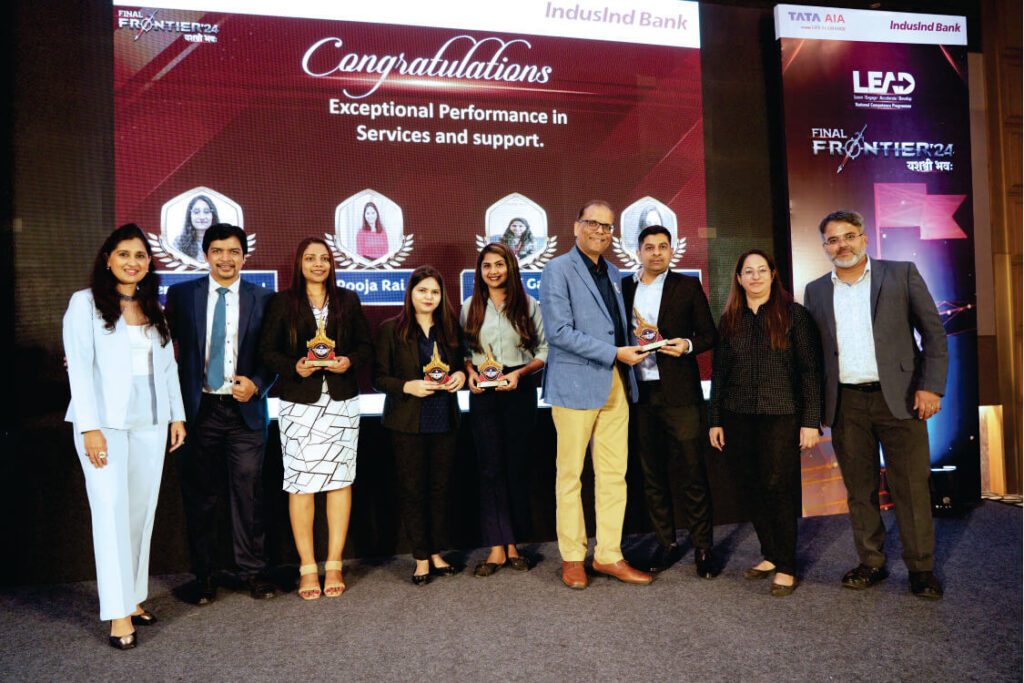
Awards and Recognition: The Heart of Every Dealer Meet
If a dealer leaves the event feeling unrecognised, it does not matter how good the food was or how famous the entertainer. Recognition is the emotional currency of dealer meets — and most companies dramatically under-design this segment. The strongest dealer events use multiple award categories so that a wide spread of partners walk away with public recognition, not just the top three or four performers.
Here are the award categories that consistently work across industries:
Performance-Based Awards
- Top Performer of the Year
- Highest Revenue Achiever
- Highest Year-on-Year Growth
- Highest Unit Sales
- Quarterly Top Performers
- Regional Top Performers
Strategic Contribution Awards
- Best New Product Adoption
- Best Market Development
- Best Customer Experience Partner
- Innovation in Sales Approach
- Best Showroom or Outlet
- Marketing Excellence Award
Loyalty and Longevity
- Long-Standing Partnership (10+, 20+, 25+ years)
- Most Consistent Performer
- Multi-Generation Partner Award
- Pillar Partner of the Year
- Best Family-Run Channel Partner
Emerging and Encouragement
- Best New Dealer of the Year
- Rising Star Award
- Most Promising Newcomer
- Best Performance by a New Region
- Comeback Performer
- Special Mention Awards
Entertainment and Engagement for Dealer Audiences
Entertainment at a dealer meet is not decoration. It is the energy regulator across a long day, the shared experience that gives partners something to talk about afterwards, and a visible signal that the company invested in the dealers’ enjoyment, not just their attention. Get this wrong and the awards segment loses its emotional charge. Get it right and the entire event lifts.
The instinct most companies have — book a famous celebrity, treat the rest as scheduling — is wrong. Dealer audiences are not the same as consumer audiences. They are business owners, family men and women, often older than corporate audiences, frequently mixed across regions and cultures within the same room. Entertainment that delights one group can alienate another. Selection is a craft, not a transaction.
**Live music and performances that work for mixed dealer audiences**
Bollywood tribute bands consistently outperform original acts. The audience knows the songs, can sing along, and feels emotionally engaged from the first track. Sufi singers and ghazal nights work well for older, north-Indian-skewed audiences. Punjabi or bhangra-led performances energise events with Punjabi-heritage dealer networks. Instrumental fusion (sitar-meets-electronic, tabla fusion) works for premium positioning and across age groups. Stand-up comedy works only when the material is clean, regional-language-friendly, and tested with corporate audiences — many comedians who work for urban entertainment audiences fall flat in front of mixed-region dealer rooms.
The anchor is more important than the entertainer
An experienced bilingual anchor (English-Hindi) is non-negotiable. Their job is harder than the entertainer’s — they must read the room continuously, pace segments to match energy, weave in personal references to dealers, manage transitions between business and entertainment without jarring tonal shifts, and improvise when timings slip. A weak anchor can flatten even strong entertainment. A strong anchor lifts even average entertainment. Budget for the right anchor before celebrities.
Celebrity engagement: when it works and when it backfires
A celebrity at a dealer meet can communicate one specific message: this company is willing to spend significantly on its partners. The message is real and partners notice. But the celebrity must fit the audience. A film actor whose career peaked in the 1980s often resonates more with a 50-year-old dealer audience than a current Gen-Z star. Cricket icons consistently work across audiences and regions. Spiritual or motivational speakers (Jaya Kishori, Sandeep Maheshwari, Jay Shetty, Gaur Gopal Das) work well for audiences that value reflection alongside celebration. Avoid celebrities whose appeal is narrow — what entertains a Mumbai office audience may not entertain a Surat or Coimbatore dealer.
Interactive segments that engage rather than perform
Some of the strongest dealer meet entertainment is not performance at all. A live drum circle with dealers participating. A magician moving table-to-table doing close-up illusions. A caricature artist sketching dealers during the cocktails session. A photo-booth with branded props for dealers to take home memorable shots. These segments make dealers active participants rather than passive audience members — and active participants form stronger memories of the event.
Theme-led entertainment as a unifier
A clear theme for the event — Bollywood Night, Royal Indian, Vintage Vegas, Tropical Carnival, Decade Throwback — creates visual coherence across decor, attire, music, and food. Themes work especially well for dinner segments where the formal day-time event has wound down. They give dealers something specific to remember and post about. Pick themes that photograph well — visual content from a themed evening drives weeks of post-event social engagement.
What kills entertainment energy quickly
Long sound checks visible to the audience. Performer arriving late and visibly setting up. The anchor cracking jokes that fall flat. Music volume that fights against table conversation rather than supporting it. Performances stretched beyond the audience’s appetite. Celebrities clearly there for the paycheck rather than the engagement. Each of these is a small thing alone. Together they signal that the entertainment was not curated with care — and dealers notice.
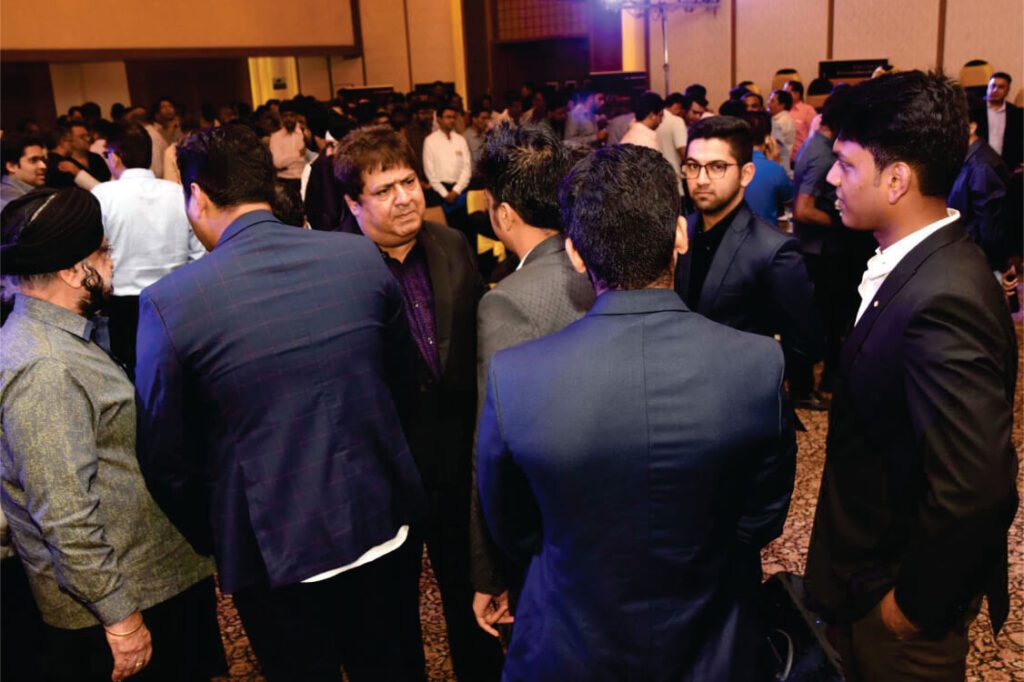
Food, Hospitality, and Gifting for Channel Partners
Food and hospitality at a dealer meet are not the soft edges of the event. They are the most visible, most discussed, and longest-remembered signals of how the company values its partners. A successful dealer leaves the event thinking about the awards moment, the strategy revealed, and what was served at lunch. A frustrated dealer remembers the lunch first, the rest second.
Dealer audiences read hospitality more carefully than most corporate audiences. They are business owners who themselves manage hospitality for customers — they recognise effort, premium positioning, and shortcuts within minutes of arriving. The gap between premium and average dealer-event hospitality is not in the menu sophistication; it is in the attention to detail.
The non-negotiables for dealer-event hospitality
A separate, clearly-labelled vegetarian counter — large, in two languages, away from the non-vegetarian section. North Indian dealer audiences in particular are sensitive to perceived contamination between veg and non-veg, even unintentional. Jain meals as a default option, not a special-request item — for many dealer audiences across Maharashtra, Gujarat, and Rajasthan, this matters. Premium tea and coffee throughout the day — instant coffee at a dealer event signals exactly what you don’t want it to. Live counters for at least 2-3 cuisines — the static buffet is read as economy positioning, even at a five-star venue.
Cuisine choices that work across dealer audiences
The strongest dealer meet menus offer breadth, not specialty: a North Indian counter, a South Indian counter, regional specialities matched to the dealer audience’s dominant region, continental for guests with international palates, and live action stations (chaat, kebabs, dosa) that add energy and visual interest. Avoid niche or experimental cuisine for general dealer audiences — Korean fusion or molecular gastronomy belongs at brand events, not partner-recognition events. The goal is for every dealer to find food they recognise and enjoy without negotiation.
Premium signals worth investing in
Welcome drinks at registration (mocktails, fresh juices, premium coffee). Branded water bottles on every table — small detail, significant perceived investment. A live dessert station, ideally with a chef interaction. Single-origin tea or premium coffee at the closing hi-tea. After-dinner cordials or premium digestifs for the evening segment. None of these individually shifts the event budget meaningfully; together they communicate a tier of investment the dealers feel without articulating.
Dealer-friendly seating arrangements
Round tables of 8-10 rather than long rectangular tables — round tables enable conversation; rectangular ones create hierarchy. Mix dealer-management seating intentionally so senior leaders are accessible across the room, not clustered. Pre-printed name cards with proper salutations (Mr., Mrs., Shri, Smt as appropriate to the dealer’s preference) — wrong honorifics can offend more than a missing course. For VIP and long-standing partners, reserved tables with floral arrangements or place cards signal recognition before the awards segment even begins.
Gifting: the take-home memory
The gift bag every dealer carries home is the longest-running deliverable of the entire event. Cheap branded merchandise (plastic mugs, low-quality pens) communicates exactly the opposite of what the event tried to build. Strong dealer-meet gifting includes premium-quality individual items: leather diary or notebook, decent fountain pen, premium tea or coffee selection, branded apparel of genuine quality, or a curated regional-craft item (Pichwai print, brass artefact, handcrafted item from a dealer-region). Gift bag budgets vary widely by client and event tier — but the principle is consistent: invest in fewer, higher-quality items rather than many cheap ones. The take-home memory is worth more than the per-bag cost saving.
Special gifting for top performers
Beyond the standard gift bag, top award winners should receive something distinct — a higher-quality version of the standard gift, a personalised item with their name engraved, or an experience voucher (luxury hotel weekend, premium dining). The gift should match the recognition tier. A “Top Performer of the Year” who receives the same gift bag as every other dealer feels the recognition was symbolic rather than real.
Hospitality follow-through after the event
Within 48 hours: a thank-you email from senior leadership, personally addressed. Within 7 days: high-resolution event photographs shared digitally, including award presentations. Within 14 days: a curated photo album for top award winners, printed or digital. Within 30 days: a personal call from the business head to top-performing dealers to reinforce the recognition. Most companies stop at the event itself. The ones that follow through measurably outperform on dealer retention.
Logistics: Transport, Accommodation, and On-Site Coordination
Operationally, a dealer meet is twice the work of an employee event of the same size. Twice the dietary considerations, twice the language preferences, and a much lower tolerance for things going wrong. Your partners are not paid to be there — they have chosen to come, and the experience has to earn that choice from the moment they leave their hotel to the moment they reach home.
Transport: the first impression and the last
For 1-day Mumbai events, organised transport from dealer hotels to the venue is standard for premium positioning. Buses with hostess service, branded vehicles, or premium SUVs depending on dealer tier. Pickup timings must be accurate — a dealer waiting 25 minutes in a hotel lobby has already started forming a negative impression before reaching the event. For dealer meets where partners arrive directly at the venue, valet parking with sufficient capacity is non-negotiable. A 500-dealer event can mean 200+ vehicles, often arriving in a 90-minute window. Underestimating parking is one of the most common operational failures.
Accommodation handling
For 2-day events or destination meets, hotel block bookings must be done early — premium properties book months in advance for peak seasons (January-March, October-November). Room category should match dealer tier; downgrading senior partners to standard rooms when other partners get suites creates visible hierarchy problems. Welcome amenities in rooms (a personalised welcome card, fresh fruit, branded gift) cost little but signal investment. Check-in coordination matters — a dealer waiting 30 minutes at the hotel reception after a flight is already frustrated before the event starts.
On-site coordination team
A dealer meet requires a dedicated coordination team larger than companies typically expect. For a 500-attendee event, plan for: a registration team of 4-6, an on-floor coordination team of 6-8, dedicated handlers for VIP and long-standing partners, technical AV team, food coordination team, photographers and videographers, security and crowd management. The team should be visible (branded clothing, identifiable badges) but unobtrusive — present when needed, invisible otherwise.
Communication before the event
Set up a dealer WhatsApp group (or dedicated event app) 10-14 days before the event with: venue location and map, expected arrival time, dress code, agenda overview, transport details if arranged, hotel information for outstation dealers, point-of-contact for queries. Clear pre-event communication reduces 80% of the queries that would otherwise come on event day. Many companies skip this and end up with their reception desk swamped at registration time.
Registration day execution
The first 90 minutes — registration, welcome tea, hall entry — set the tone for the entire day. Plan for: clearly marked registration counters by region or alphabet, sufficient staff to keep waiting time under 5 minutes, name badges pre-printed (not handwritten), welcome kits packaged for quick handover, branded photography backdrop at the entrance with a dedicated photographer. The dealer’s first 10 minutes at the venue is when they form their impression of how well-organised the event will be.
Help desk and dealer concierge
A staffed help desk at the venue, operational throughout the event, handles: lost items, dietary queries, accommodation issues for staying dealers, medical concerns, transport adjustments, post-event return logistics. For premium dealer meets with VIP partners, assign individual concierge staff to top-tier dealers — one person who is their point of contact for the entire event. This level of attention is felt and remembered.
Medical and emergency readiness
Always have on-site medical support for dealer events with 200+ attendees — a trained nurse at minimum, a doctor for events with 500+ attendees or VIP attendees with known health considerations. Identify the nearest hospital and the route. Brief the team on first-aid availability. For older dealer audiences (typical in long-established partner networks), the medical readiness is not theoretical — minor health events at long days are common.
Photography, videography, and content capture
Two photographers minimum for a 300-700 attendee dealer meet — one focused on awards and senior management moments, one on candid coverage. Videography for the awards segment, the senior leadership address, and montage footage for post-event sharing. A drone for outdoor venue events when permitted. The post-event content (photographs, video highlights, social-media-ready clips) is the deliverable that compounds the event’s impact for weeks afterwards.
Closing and departure
A clear closing moment — a final address, group photograph, gift bag handover at the exit. Dealers should leave with a definitive memory of how the event ended, not trail off because the schedule ran out. Departure transport should be ready and identified clearly — dealers waiting in a venue lobby for buses that haven’t arrived undoes much of the goodwill built earlier in the day.
The pattern across all logistics: small details, accumulated. No single one transforms the event, but their absence becomes the lasting impression. Premium dealer events are won and lost on these details.
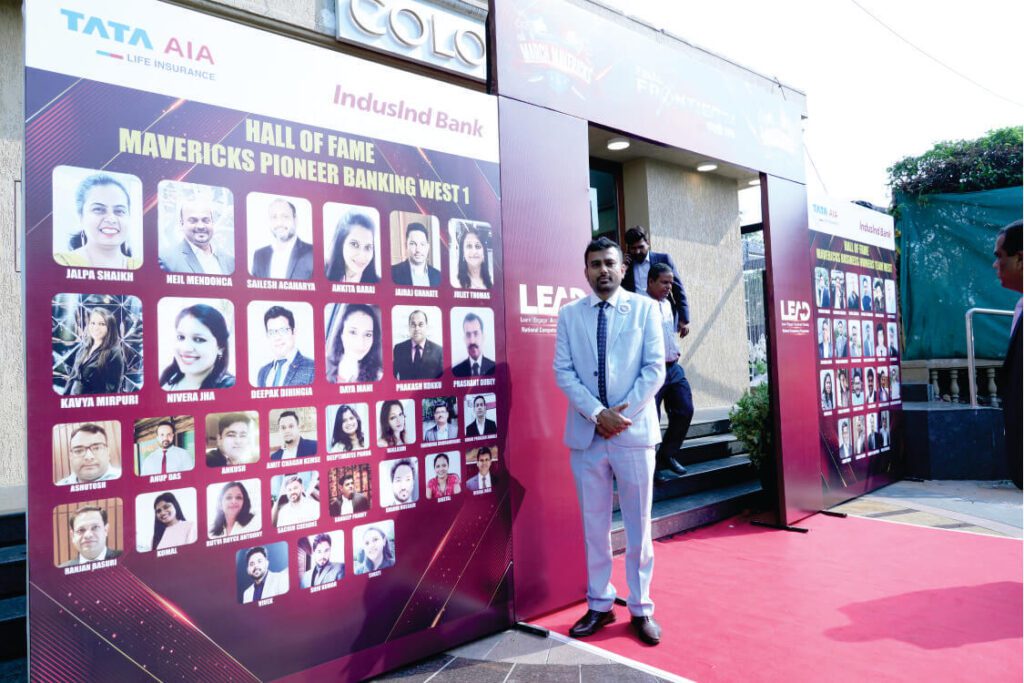
What Does a Dealer Meet Cost in India?
Dealer meet costs in India are driven primarily by attendee count, format choice, venue tier, and entertainment lineup. Every event is quoted individually based on the specific brief — but here are the realistic planning ranges based on what MRG Evennts typically delivers for Mumbai and near-Mumbai dealer events.
| Event Format and Scale | Typical Cost Range |
|---|---|
| 1-day Mumbai event, 100–300 dealers | ₹20–40 Lakh |
| 1-day Mumbai event, 300–500 dealers | ₹35–60 Lakh |
| 1-day Mumbai event, 500–1,000 dealers | ₹50 Lakh–1 Crore |
| 2-day event with overnight stay, 200–500 dealers | ₹50 Lakh–1.5 Crore |
| 1-night offsite in Lonavala / Khandala / Khopoli | ₹35–80 Lakh |
| Multi-city zonal dealer meet (4–6 Indian cities) | ₹80 Lakh–3 Crore |
For destination dealer meets in Goa or international locations (Thailand, Sri Lanka, Dubai), costs typically run from ₹1 Crore to ₹4 Crore+ depending on destination, duration, and dealer count. These events involve specialised travel logistics and are planned in partnership with destination management specialists.
What's typically included in these ranges
- Venue rental and F&B minimums — typically the single largest cost (30–45% of total)
- Stage, AV, lighting, LED screens — central to perceived production quality
- Entertainment lineup — anchor, performers, theme execution
- Decor and branding — backdrops, signage, registration zone, table arrangements
- Awards and recognition execution — trophies, certificates, photography, framing
- Gifting — standard dealer gift bags plus top-performer recognition items
- On-site coordination — registration, floor management, VIP handling, help desk
- Photography, videography, and post-event content
- Event management fee — typically 8–12% of total event cost
What can push costs significantly higher
- Celebrity engagement — known anchor, motivational speaker, performer (₹3–25 Lakh+ for one engagement)
- Premium venue exclusivity — Jio World, Taj Lands End, ITC properties (venue alone can be ₹15–35 Lakh)
- Premium hotel block bookings for 2-day events
- Custom production builds — branded sets, themed environments, large-format LED walls
- Premium gifting — high-end items, personalisation, region-specific curated craft
- International or out-of-region dealer attendance requiring travel and accommodation support
Where companies typically over-spend without proportionate return
- Famous celebrities who don't fit the dealer audience — the spend is visible, the engagement is not
- Over-elaborate decor — beyond a point, dealers do not notice or value additional decor investment
- Excessive AV production — beyond a clear stage, good sound, and clean LED, additional production rarely shifts dealer perception
- Multiple back-to-back entertainers — diminishing returns after the second performance
- Premium venues without matching hospitality investment — the venue communicates intent that the food and service then undermines
Note: These are planning estimates only. Actual costs depend on specific brief, dealer profile, venue choice, season, weekday vs weekend, and entertainment lineup. Peak season (January–March fiscal year close and October–November post-Diwali) commands premium pricing. Contact MRG Evennts for a quote tailored to your specific dealer meet.
Common Mistakes to Avoid When Planning a Dealer Meet
After delivering dealer meets across automotive, building materials, FMCG, industrial, and shipping sectors, here are the recurring mistakes that quietly damage otherwise well-planned events. None are dramatic. All are preventable with experience. Most are made repeatedly by companies that build their planning processes around past assumptions rather than current dealer expectations.
Treating it as an internal corporate event
The biggest mistake is approaching dealer meet planning with the same playbook used for employee events. Dealers are not employees. They are business owners who chose to be there. Premium hospitality, recognition density, and respect for their time are not optional finishes — they are the product itself. Companies that miss this run perfectly-organised events that nonetheless leave dealers feeling like an audience rather than partners.
Too few award categories
A dealer meet with 400 partners and only 6 award categories leaves 394 dealers unrecognised. Recognition is the emotional currency of the event — if too few partners receive it, the event fails its core purpose. Aim for 15–25 awards across performance, strategic, loyalty, and emerging categories. Better to recognise broadly with smaller honours than to make recognition feel exclusive and unattainable.
Long management speeches early in the day
Dealer audiences resist back-to-back management presentations, especially before lunch. Energy drops, attention drifts, and the awards segment in the afternoon inherits a tired room. Keep the opening address under 20 minutes total. Break business sessions into segments. Build in interactive moments. Every minute beyond what's needed costs the day's energy curve.
Booking the wrong celebrity for the audience
A current Gen-Z influencer can fall completely flat with a 50-year-old dealer audience. A film actor whose career peaked in the 1990s often resonates more than a current star. Match the celebrity to the audience's age, region, and cultural reference points — not to the company's PR aspirations. The spend is visible regardless; the engagement is what matters.
Cheap or generic gifting
The gift bag is the longest-running deliverable of the entire event — it ends up on the dealer's desk for months. Plastic mugs, low-quality pens, or unbranded merchandise communicates exactly the opposite of what the event tried to build. Invest in fewer items of genuine quality. A leather diary or a curated regional artefact outlasts the memory of even the best speech.
Junior management presenting major awards
When top awards are handed over by mid-level managers instead of the CEO or business head, the recognition tier falls flat. Senior dealers especially read this as a signal that the company does not weight the award seriously. The MD, CEO, or business head must personally present major recognition. Non-negotiable.
Under-coordinated registration and arrival
The first 15 minutes at the venue set the dealer's impression for the entire day. Long registration queues, confused signage, unmanned welcome desks, or missing badges instantly signal poor organisation. Plan for sufficient staff so no dealer waits more than 5 minutes at registration. The cost of additional staff is trivial. The cost of a bad first impression is significant.
Forgetting about regional and cultural preferences
A dealer meet with a Maharashtrian-Gujarati dominant audience requires different hospitality, music, and food than one with a North Indian or South Indian dominant network. Jain food as an exception rather than a default. Anchors who only speak English. Music selections that ignore the audience's region. Each is a small signal — together they communicate that the company didn't think carefully about who would be in the room.
No post-event follow-through
Most companies treat the event itself as the deliverable. The companies that build the strongest dealer relationships treat the event as the midpoint of a longer programme. Within 48 hours: thank-you communication. Within 7 days: photographs shared. Within 30 days: personal calls to top performers. The follow-through is where the in-event recognition compounds into year-long loyalty.
Choosing the wrong format for the actual business objective
The most expensive mistake. Booking a Goa destination event when the company's real need was a 1-day Mumbai update. Stretching what should be a 1-day event into 2 days without enough content to fill the time. Cancelling a 2-day strategy session and forcing it into a half-day because of budget concerns. The format should follow the objective, not the other way around. When the format and objective misalign, the event fails regardless of how well it's executed.
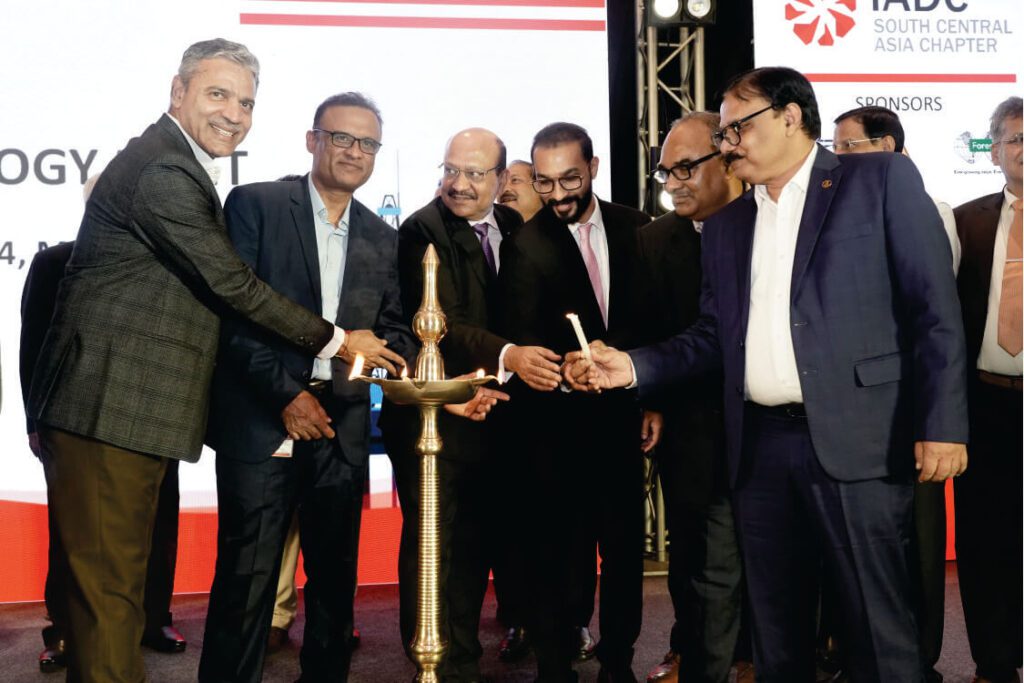
Sample Planning Timeline for a Dealer Meet (12-14 Weeks)
A 500-attendee dealer meet typically needs 12-14 weeks of focused planning. Smaller events of 100-300 dealers can be compressed to 8-10 weeks. Multi-city zonal rollouts or destination events require 16-24 weeks. Below is a realistic week-by-week breakdown for a typical 1-day Mumbai dealer meet of 300-500 attendees.
Foundation: Brief, Budget, Venue Sourcing
- Internal alignment on event objectives, dates, and budget envelope
- Dealer count estimate and regional breakdown
- Venue shortlisting and site visits — capacity, AV, registration zone, parking
- Initial conversations with event management partners
- Decision on format: 1-day Mumbai, 2-day overnight, or offsite
Lock-In: Venue, Date, Event Partner
- Venue contract signed and date confirmed
- Event management partner finalised
- Theme and creative concept locked
- Save-the-date communication drafted for dealer network
- Initial agenda framework approved by business head
Design: Agenda, Entertainment, Decor
- Detailed run-of-show / minute-by-minute agenda drafted
- Anchor and entertainment lineup booked
- Decor and theme execution plan finalised
- Award categories defined with HR and business head
- Catering menu confirmed with venue, including dietary specifications
Production: Awards, RSVPs, Communications
- Save-the-date sent to all dealers
- Award winners shortlist locked (with confidentiality until event day)
- Trophy and certificate design approved
- Photographer and videographer briefed and booked
- Detailed AV and stage plot signed off
- Gift bag items finalised and quantities confirmed
Detailing: Sign-Offs and Confirmation
- Formal invitation sent to dealer network
- RSVP collection with dietary preferences captured
- Transport plan drafted (if pickup and drop arranged)
- Hotel block bookings confirmed for outstation dealers
- Award certificates printed and trophies dispatched to event coordinator
- Final headcount projection sent to venue and catering
Coordination: Logistics and Pre-Event Comms
- Final dealer headcount confirmed with venue
- Dealer WhatsApp group created with venue map, agenda, transport details
- Medical standby confirmed with venue and nearest hospital identified
- Welcome kits, name badges, and registration material prepared
- On-site coordination team briefed and role-assigned
- Senior management briefing on award winners and recognition flow
Rehearsal and Final Walkthrough
- Full venue walkthrough with event partner and senior client team
- Run-of-show rehearsal with anchor and performers
- AV and stage rehearsal — sound checks, video plays, lighting cues
- Award presentation sequence rehearsal
- Help desk and registration zone setup confirmed
- Reminder communication sent to all confirmed dealers
Execution Day
- On-site team in place 4-6 hours before guest arrival
- Final AV checks, stage lighting verified, branding setup
- Welcome team and registration counters operational
- Event executed per run-of-show with on-floor flexibility
- Photography and videography throughout
- Clean closing moment, gift bag distribution at exit
Follow-Through (Week 1-4 After)
- Within 48 hours: thank-you communication to all attendees
- Within 7 days: high-resolution photographs shared with all dealers
- Within 14 days: award winner photo albums delivered
- Within 30 days: personal calls from senior leadership to top performers
- Internal debrief: what worked, what to refine for next year
- Vendor settlements and event documentation completed
Planning a Dealer Meet for Your Channel Partners?
From venue and agenda to awards execution, entertainment, and on-ground coordination — MRG Evennts handles every detail. Share your brief and we'll respond with format recommendations, an approach, and a transparent quote within 48 hours.
15+ years • Extensive dealer meet experience • 2,000+ events delivered • 95% repeat clients
Frequently Asked Questions About Dealer Meet Planning
For a typical 1-day Mumbai dealer meet of 300-500 attendees, start planning 12-14 weeks in advance. Smaller events of 100-300 dealers can be planned in 8-10 weeks. Multi-city zonal events or destination meets in Goa require 16-24 weeks because premium venues and hotel inventory book months ahead. Starting late forces compromises on venue, entertainment, or both — neither of which dealer audiences forgive.
Dealer meet costs in India range from ₹20 lakh for a 1-day Mumbai event of 100-300 dealers, to ₹50 lakh-1 crore for 500-1,000 attendees, to ₹35-80 lakh for a 1-night Lonavala or Khandala offsite. Multi-city zonal rollouts across 4-6 Indian cities typically cost ₹80 lakh-3 crore in total. Destination events in Goa or international locations start from ₹1 crore. Every event is quoted individually based on the brief.
For most companies, a well-structured 1-day Mumbai event of 8-10 hours delivers more value than a stretched 2-day event. The 1-day format covers the year review, strategy update, awards segment, entertainment, and dinner without exhausting dealers. 2-day formats with overnight stays make sense when the business needs deeper strategic alignment or premium partner recognition. Stretching a 1-day worth of content into 2 days reads as wasteful to dealer audiences.
For 500+ attendee dealer meets, Jio World Convention Centre in BKC offers convention-scale capacity. For 300-700 attendee events, premium hotel ballrooms like Taj Lands End, Sahara Star, ITC Maratha, Renaissance Mumbai Powai, and JW Marriott Mumbai Juhu work consistently well. Renaissance Mumbai Powai specifically suits 2-day events because it combines convention space with on-site hotel rooms, eliminating transport between separate venues.
Aim for 15-25 award categories covering performance (Top Performer, Highest Growth, Highest Revenue), strategic contribution (Best New Product Adoption, Innovation Award), loyalty (Long-Standing Partnership awards for 10+, 20+, 25+ year partners), and emerging recognition (Best New Dealer, Rising Star). A dealer meet with only 5-8 awards leaves the majority of partners unrecognised — defeating the core purpose of the event. Aim for roughly 5-8% of attendees receiving some form of public recognition.
A 1-day Mumbai event is correct for most annual dealer meets — annual updates, recognition, agenda-led events. Destination events in Goa or international locations are appropriate when the company wants to make a significant recognition statement to top-performing partners, launch a major new product, or restructure the channel programme. The most expensive mistake we see is booking a destination event because competitors did, without a clear business reason. Dealers recognise this and the event underdelivers.
Bollywood tribute bands consistently outperform original acts because dealer audiences know the songs and engage immediately. Sufi singers and ghazal nights work for older, north-Indian-skewed audiences. Punjabi or bhangra performances energise events with Punjabi-heritage networks. Motivational and spiritual speakers (Jaya Kishori, Sandeep Maheshwari, Jay Shetty, Gaur Gopal Das) work well for audiences valuing reflection alongside celebration. Avoid niche genres and current Gen-Z influencers for mixed-region 40+ dealer audiences — they often fall flat.
Strong dealer meets produce three measurable outcomes in the months following: improved dealer retention and renewal rates, higher engagement with new product launches or channel programmes communicated at the event, and stronger qualitative feedback from top-performing partners. Within 30 days, conduct one-on-one calls with top award winners to capture honest feedback. Anonymous post-event surveys to the broader dealer network give honest signal on what worked and what fell flat.
Yes. MRG Evennts has executed zonal and multi-city dealer events covering Mumbai, Delhi, Bangalore, Chennai, Kolkata, Hyderabad, and other key Indian markets. Multi-city rollouts use the same core agenda, awards framework, and creative concept, executed across 4-6 cities over 4-8 weeks. This format gets closer to dealer networks geographically while maintaining consistent brand experience across regions.
MRG Evennts treats every dealer meet brief as three layered questions: what is the business objective, who is the dealer audience and what do they value, and what is the realistic budget for that combination. The format recommendation, venue, agenda, entertainment, and gifting all flow from those three answers. With 15+ years of corporate event execution for companies including Reliance, L&T, Kotak Mahindra, Tata AIG, and Aditya Birla Group, we focus on getting the business outcome right rather than maximising event spend. Share your brief and we will respond with a tailored proposal within 48 hours.