
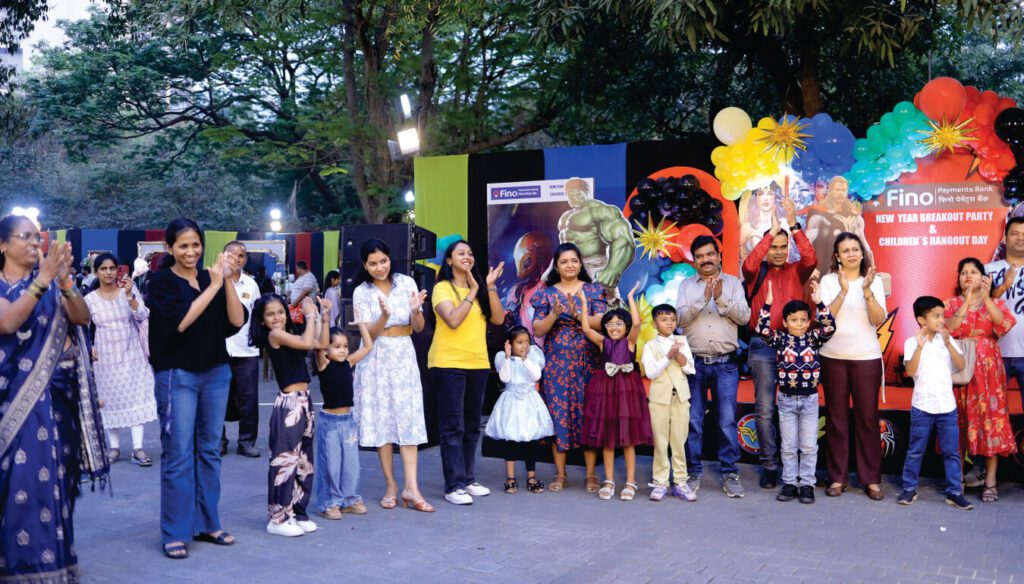
By Shalinie Gill, Co-founder • MRG Evennts
A corporate annual day with employees and their families is one of the most powerful engagement events a company can host — but it’s also the hardest to get right. The audience spans three generations, dietary needs vary, entertainment has to land for both adults and kids, and the logistics are far more complex than a standard corporate event. Over 15+ years and 2,000+ events, MRG Evennts has planned dozens of family-inclusive annual days for companies including Reliance, L&T, Kotak Mahindra, and Aditya Birla Group. This guide brings together what actually works — from venue choice and themes to cost ranges and the common mistakes we’ve seen.
| Typical Duration | 4–8 hours, including meal and entertainment |
| Audience Mix | Employees + spouses + children (typically ages 2–14) |
| Format Options | Full-day outdoor, evening indoor, weekend offsite |
| Guest Capacity | 100 to 2,000+ attendees (family multiplier ~2-3x employees) |
| Lead Time | 8–12 weeks recommended for family-inclusive events |
| Cost Range (Mumbai) | ₹8 Lakh to ₹40 Lakh+ depending on scale |
| Best Months | December–February (post-school-exam window) |
Why Annual Days with Family Make a Real Difference
Watch: Family Annual Day at The Club Andheri for Bajaj Consumer by MRG Evennts
When a company invites employees’ families to its annual day, the entire dynamic changes. Spouses meet the colleagues their partners talk about. Children connect a workplace to a real place. Employees experience a different version of themselves at work — relaxed, included, proud. The result is stronger retention, deeper culture, and the kind of organisational loyalty that benefits packages alone can’t build.
Companies that consistently include families in their annual day tradition see measurably higher employee engagement scores. It’s why some of MRG Evennts’ largest corporate clients — across BFSI, manufacturing, and IT — have made family-inclusive annual days a non-negotiable part of their calendar.
But getting it right is harder than a standard corporate event. A bored child can derail an entire family’s experience. A spouse who feels out of place won’t come back next year. Food that excludes 30% of attendees becomes the story. Family annual days reward planning — and punish shortcuts.
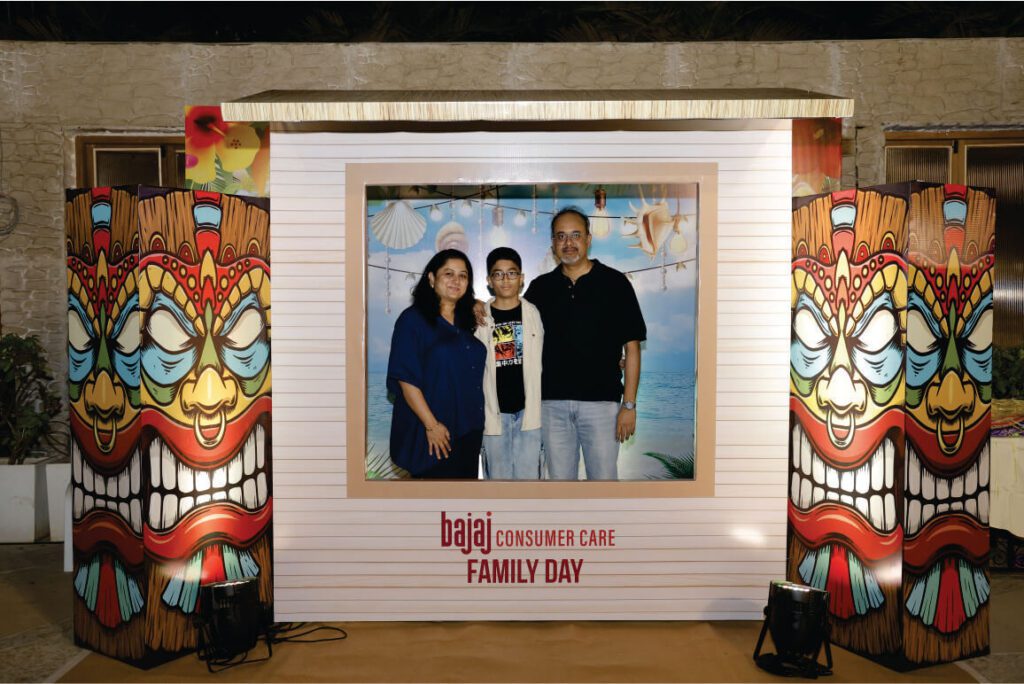
Choosing the Right Format for Your Annual Day
There's no single right format for a family annual day. The best choice depends on your company size, budget, the age mix of children attending, and the experience you want families to remember.
Evening Indoor Event
4-5 hours, 6 PM-11 PM
Ballroom-based with dinner, entertainment, and awards segments. Easier logistics, weather-proof, and a polished feel. Works for 200 to 2,000+ attendees.
Best for: Established companies wanting a premium, formal celebration with families.
Full-Day Outdoor
6-8 hours, 11 AM-7 PM
Resort, club, or lawn venue with games, activities, lunch, and performances. Strongest format for kid-heavy audiences. Weather-dependent.
Best for: Companies prioritising family bonding and activities over formal programming.
Weekend Offsite
1-2 days, destination format
Goa, Lonavala, or Karjat with overnight stay. Highest cost and complexity, but creates the strongest memories and team bonding.
Best for: Senior-leadership-heavy companies or milestone year celebrations.
Best Venues in Mumbai for Family Annual Days
Picking the right venue for a family annual day is different from picking one for a regular corporate event. You need space for kids to move, a layout that doesn’t pin families to a single table for hours, kid-friendly safety standards, and ideally an outdoor or open area where children aren’t restricted to formal seating.
Based on MRG Evennts’ experience executing family-inclusive events across Mumbai, here are the venue categories that work best:
Five-star hotels with outdoor lawns — properties like JW Marriott Mumbai Juhu, Renaissance Mumbai Powai, and Westin Mumbai Powai Lake combine indoor ballroom comfort with outdoor lawn space for kids’ activities. Ideal for evening events.
Resort-style venues just outside Mumbai — properties around Karjat, Lonavala, and Khopoli with pool, lawns, and indoor banquet — perfect for full-day formats where families spend extended time on-site.
Clubs with multi-zone layouts — venues like The Club Andheri West offer indoor ballroom space alongside outdoor lawn and poolside areas, allowing simultaneous formal programming and kids’ activities.
Convention venues with breakout space — for very large family annual days (1,000+ attendees), purpose-built venues like Renaissance Mumbai Powai Convention Centre handle scale comfortably.
For detailed venue listings with key halls, capacities, and our notes on which work best for what — see our complete guide to Mumbai corporate event venues
Activity Ideas for Family Annual Days
A family annual day needs activities for three distinct audiences — adults, children, and the whole family together. Plan for all three; under-cater for any one and that group's experience suffers.
For Adults
- Lounge zones with live music
- Photo booths with company branding
- Casino tables (non-monetary chips)
- Adult games like quiz, antakshari, talent rounds
- Cocktail-mixing or mocktail stations
- Spa or wellness pop-ups (for full-day formats)
For Kids
- Bouncy castle and inflatable play zones
- Face painting and tattoo artists
- Magic show or puppet show
- Arts and crafts corner with take-home projects
- Storytelling sessions for younger kids
- Caricature artists for keepsake portraits
- Balloon twisting and clown acts
Mixed (All Together)
- Treasure hunts with adult-kid teams
- Family relay races and tug-of-war
- Group dance workshops (Zumba, Bollywood)
- Drum circles and percussion sessions
- Themed dinner with interactive courses
- Awards segment with kid-friendly categories
- Photo wall and group photo shoot
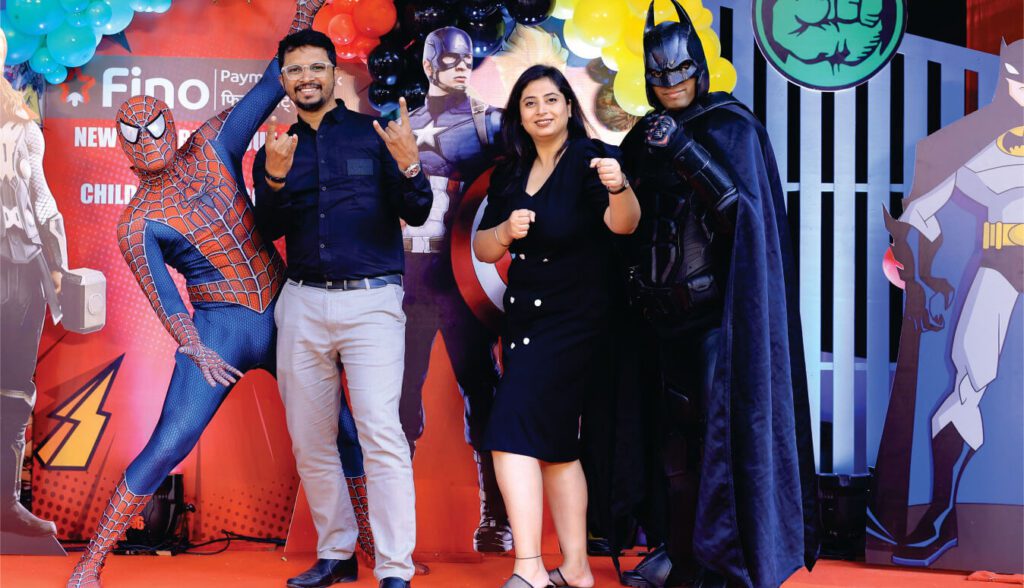
Entertainment and Themes That Work
.Entertainment is what separates a memorable family annual day from a forgettable one. The right entertainment lineup keeps energy high across a 4-8 hour event, gives kids something to look forward to, and creates the shared moments employees talk about for months.
Live performances that work for mixed audiences
Stand-up comedians (clean material), Bollywood tribute bands, dance troupes, and instrumental fusion acts work best because they engage all ages simultaneously. Avoid niche genres or anything that requires English-language fluency to enjoy — accessibility matters when you have a multi-generational audience.
Anchors and hosts
A skilled bilingual anchor (English-Hindi) is non-negotiable for family annual days. The right anchor reads the room, paces segments to attention spans, includes kids in interactive moments, and keeps energy up without overwhelming. Booking a known emcee can lift the entire event.
Theme concepts that work for families
The strongest themes for family annual days are visual, photogenic, and require no costume commitment from guests:
Bollywood Night — universally familiar, easy decor (red carpet, film posters, paparazzi photo booth), Bollywood music backdrop. Kids love the dress-up factor; parents enjoy the nostalgia.
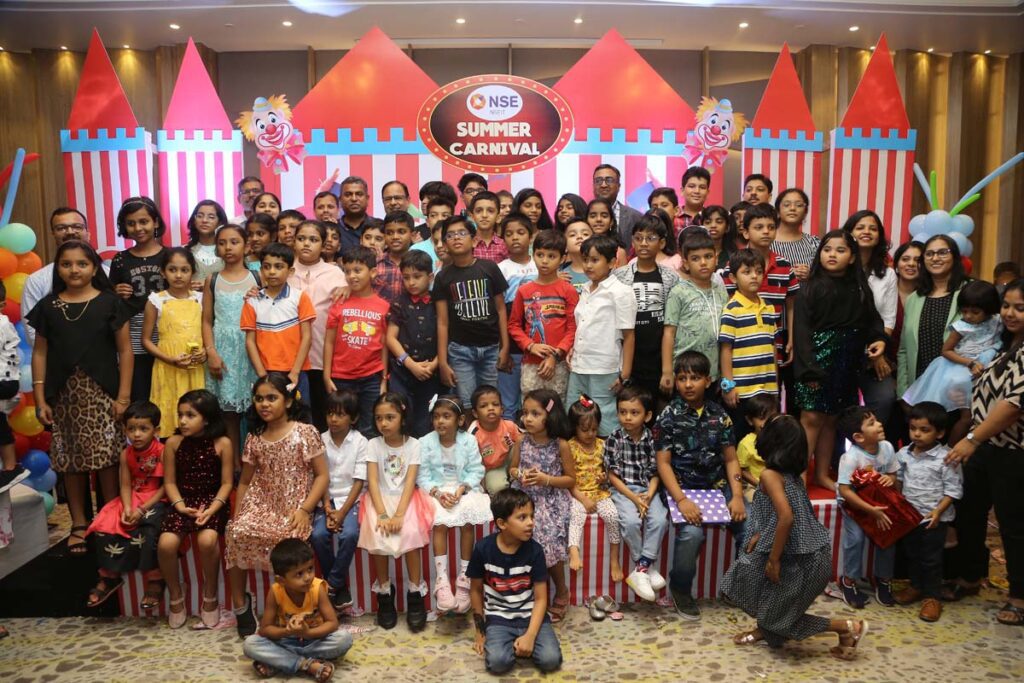
Carnival or Funfair — game stalls, popcorn machines, candy floss carts, ferris wheel rentals (for outdoor venues). Strongest format for kid-heavy audiences.
Awards Night Gala — formal black-tie style for adults, with a kid-friendly “junior awards” segment. Works well for senior-leadership-heavy companies.
Decades Theme (80s, 90s, retro) — disco lights, retro music, optional dress-up. Strong for parties celebrating mid-career professionals who grew up with those eras.
Travel Around the World — different decor zones representing countries (Bollywood for India, samba for Brazil, etc.), each with themed food. Photogenic and easy to scale up or down.
Outdoor Mela / Festival Theme — kite-flying, mehendi stalls, dhol players, Indian street food. Best for full-day outdoor formats and seasonal events.
A well-executed theme is what your employees post on social media — and what makes families want to come back next year.
Food and Catering for Mixed Audiences
Watch: Space-themed corporate annual event for Fino Bank in Mumbai by MRG Evennts
Food becomes more political at a family annual day than at any other corporate event. Adults have preferences. Kids reject anything unfamiliar. Senior parents may have strict dietary needs. Dietary restrictions — Jain, vegan, gluten-free, lactose-intolerant, allergic — multiply when extended families are present. A bad food experience is what your event will be remembered for.
The non-negotiables
Always have a clearly labelled vegetarian-only counter, separate from non-vegetarian. Many Indian families don’t share serving utensils between veg and non-veg, and mixing them — even unintentionally — causes genuine offence. Make labels large, in both English and a local language.
Always have a dedicated kids’ counter. The standard adult menu — paneer tikka, dal makhani, biryani — does not work for most children. Plan a separate counter with pasta, sandwiches, French fries, chicken nuggets, mini pizzas, ice cream, and unlimited soft drinks. This counter will be busy. Don’t under-cater it.
Always offer something for senior parents. Bland, easily-chewable, less-spicy options like khichdi, idli, simple dal-rice, fruit, and curd. Older guests often skip meals at family events because nothing on the menu suits them — and they remember it.
Catering formats that work
Live counters and food stations work better than buffet lines for family events. Kids can move around, parents can graze, and the energy stays mobile. Sit-down formal service rarely works for full-day family formats — it pins families to tables and kills the energy.
For evening events, a 90-minute cocktail and starters window followed by a 60-minute dinner service is the standard format. Don’t extend dinner beyond 75 minutes — families with young kids start leaving.
Don’t forget
Plenty of water stations, available throughout the venue, not just at the food counters. Hydration is the most-overlooked logistic at outdoor family events, especially in Mumbai’s October-February peak season when daytime temperatures can still climb. For kids running around for hours, this matters more than the menu.
A small dessert station that runs through the event (not just at the end) creates a steady draw — and gives kids something to look forward to without sugar-overloading.
Logistics: Transport, Safety, and Kids' Management
The logistical complexity of a family annual day is roughly double that of a regular corporate event. Twice the headcount, multiple age groups, longer dwell times, and a much lower tolerance for things going wrong. The companies that get this right are the ones that plan logistics as carefully as the entertainment.
Transport
For events held outside Mumbai’s main business hubs — resorts in Karjat or Lonavala, properties in Powai or Juhu reached through traffic — organised transport is the difference between strong attendance and last-minute drop-outs. Arrange a fleet of buses with clear pick-up points and timings. Most families will only commit to attending if transport is sorted, especially for evening events that end late.
For in-Mumbai venues, valet parking with sufficient capacity is the equivalent. Underestimating parking is one of the most common mistakes — a family event for 500 employees can mean 200+ cars.
Kids’ safety and supervision
Designate a dedicated kids’ zone with clear boundaries, supervised by trained staff or hired professional minders. This is not optional. Children at corporate events wander, get tired, get lost, and occasionally need first aid. A dedicated zone with structured activities keeps them safe and lets parents enjoy the adult programming without constant supervision anxiety.
For larger family events (300+ attendees), assign a 1:15 minder-to-child ratio at minimum. Identify children with name tags including the parent’s mobile number — this is standard practice and prevents avoidable problems.
Medical and emergency readiness
Always have an on-site medical professional — at minimum a trained nurse with a first-aid kit, ideally a doctor for events over 500 attendees. Make sure the venue’s nearest hospital is identified and the route known to the event manager. For outdoor events, account for heat, dehydration, and minor injuries from kids’ activities.
Communication
Set up a WhatsApp group for attendees a week before the event with venue map, timing, dress code, parking instructions, and what’s planned for kids. Families plan their day around these details, and clear communication beforehand reduces 80% of the questions you’d otherwise field on event day.
A designated “help desk” at the venue entrance — staffed for the first 90 minutes — solves the rest. This is where lost kids, lost parents, dietary queries, and venue questions get resolved.
Closing the event
Build in a clear close-out moment. A final group photo, a goodbye announcement, gift bags distributed at the exit. Family events that just trail off feel anticlimactic. A clean close gives the event a definitive memory rather than a quiet exit.
What Does a Family Annual Day Cost in Mumbai?
Family annual day costs in Mumbai are driven mostly by headcount (remember the 2-3x family multiplier), venue choice, entertainment scale, and whether transport is included. Below are realistic planning ranges by event size — every event is quoted individually based on actual requirements.
| Event Scale | Typical Cost Range |
|---|---|
| Small (100–250 attendees including families) | ₹8–15 Lakh |
| Mid-size (250–500 attendees) | ₹15–25 Lakh |
| Large (500–1,000 attendees) | ₹25–40 Lakh |
| Very Large (1,000+ attendees) | ₹40 Lakh+ |
| Weekend Offsite (with overnight) | ₹30 Lakh–₹1 Crore+ |
What's typically included in these ranges
- Venue rental and F&B minimums (often the largest single cost — 30-45% of total)
- Kids' menu, special-diet provisions, and dessert stations
- Stage, AV, lighting, LED screens, and rigging
- Entertainment lineup (anchor, performers, kids' activities, theme execution)
- Decor and theme production
- Kids' zone setup, professional minders, photo booth, gifting
- On-site coordination, medical standby, and event management
What can push costs significantly higher
- Celebrity performer or known anchor (₹2-15 Lakh+ for one act)
- Premium venue exclusivity (Jio World, Taj properties — venue alone can be ₹8-20 Lakh)
- Large outdoor production (ferris wheel, tent structures, full carnival setups)
- Luxury transport (chartered buses with hostess service, premium logistics)
- Destination offsite with overnight stay, travel, and multi-day programming
Note: These are planning estimates only. Actual costs depend heavily on guest count, venue, entertainment lineup, season, and day of the week. Peak season (December–February) and weekend dates command premium pricing. Contact MRG Evennts for a quote tailored to your event.
Common Mistakes to Avoid
After delivering hundreds of family-inclusive corporate events, here are the recurring mistakes that quietly damage an otherwise well-planned annual day. None are dramatic — they're all preventable with experience.
Under-catering the kids' counter
The kids' food counter is always busier than expected — children prefer it, but so do many adults. Plan for at least 1.5x the headcount you'd expect. Running out of kids' food by 8 PM means upset children, which means leaving families.
Skipping the kids' zone for cost reasons
Companies sometimes cut the dedicated kids' zone to save budget. This is a false economy. Without it, kids wander, parents can't relax, and the event's energy fragments. The kids' zone is what makes a family annual day actually work.
Programming too long without breaks
Continuous adult-targeted programming (speeches, awards, performances) loses families within 90 minutes. Build in active intervals — interactive segments, photo opportunities, food breaks — every 45 minutes to keep multi-generational audiences engaged.
Picking a venue that doesn't suit families
Premium business hotels with formal ballrooms can feel cold for family events. Children find them sterile, families feel out of place. Resort-style or club-style venues with outdoor space almost always work better for family-inclusive formats, even at lower price points.
Forgetting senior parents
Senior family members are routinely overlooked in catering, seating, and programming. Provide soft seating, simple food options, and quieter zones. Older guests remember being thought of — and remember being ignored.
No clear transport plan for evening events
Evening family events that end at 11 PM with no organised transport see attendance fall sharply. Families with young kids need to know how they're getting home before they commit to attending. Buses or pre-arranged car services solve this entirely.
Awards segments that drag
Long, formal awards segments lose family attention fast. Keep individual awards crisp (under 60 seconds each), break them into shorter blocks separated by entertainment, and add a "junior awards" segment for kids to keep families engaged through the recognition.
No close-out moment
Events that just trail off feel unfinished. A clear ending — group photo, goodbye announcement, gift bags at the exit — gives the evening a definitive memory. Families leave feeling the event was complete, not interrupted.
Sample Planning Timeline (12 Weeks)
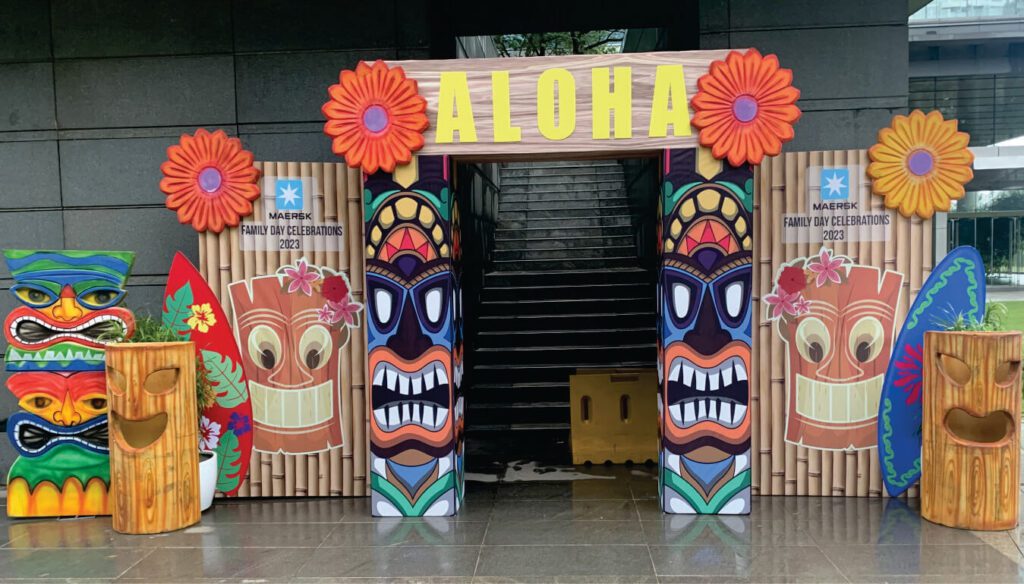
Watch: Family Day for Maersk at Taj The Trees, Mumbai by MRG Evennts
A family annual day for 500+ attendees typically needs 10-12 weeks of planning. Smaller events can compress this, but family-inclusive formats reward longer lead times because venues with outdoor space and family-friendly amenities get booked early. Here's a realistic week-by-week breakdown.
Foundation: Brief, Budget, and Venue Sourcing
- Internal alignment on objectives, dates, and budget envelope
- Headcount estimate including family multiplier (typically 2-3x employees)
- Venue shortlisting and site visits — outdoor space, kid-friendliness, parking
- Initial vendor conversations (event partner, caterer, entertainment)
Lock-In: Venue, Date, Event Partner
- Venue contract signed and date confirmed
- Event management partner finalised
- Theme and creative concept locked
- Save-the-date communication to employees and families
Design: Programme, Entertainment, Decor
- Detailed programme/run-of-show drafted
- Entertainment booked — anchor, performers, kids' activities
- Decor and theme execution plan finalised
- Catering menu confirmed including kids' counter and special diets
- Transport plan drafted if needed
Production: Confirmations and Comms
- RSVP collection from employees with family count
- Awards and recognition segments planned with HR
- Photographer and videographer booked
- Detailed AV and stage plot signed off
- Gift bags and giveaways finalised
Detailing: Sign-Offs and Logistics
- Final headcount confirmed including dietary breakdown
- Kids' zone activities and minders booked
- Medical standby and emergency plan confirmed with venue
- Transport routes and timings communicated
- Detailed pre-event communication sent to attendees (venue map, parking, timing, dress code)
Rehearsal and Final Walkthrough
- Venue walkthrough with event partner and key vendors
- Run-of-show rehearsal with anchor and performers
- Help desk and kids' zone setup confirmed
- WhatsApp group created for attendee questions
- Wet-weather contingency plan finalised for outdoor formats
Execution Day
- Early setup with full team on-site 4-6 hours before guests arrive
- Dedicated kids' zone and help desk operational from arrival
- Programme executed with built-in flexibility for energy and pacing
- Photography and videography throughout
- Clean close-out with group photo and exit gifting
Wrap-Up
- Photos and video shared with attendees within 7 days
- Vendor settlements completed
- Post-event survey to employees for next year's improvements
- Internal debrief with key learnings documented
Planning a Family Annual Day for Your Team?
From venue and theme to kids' activities, entertainment, and on-ground execution — MRG Evennts handles every detail. Share your event brief and we'll respond with ideas, an approach, and a transparent quote within 48 hours.
15+ years • 2,000+ events • 95% repeat clients
Frequently Asked Questions
For a 500+ attendee family annual day in Mumbai, start 10-12 weeks in advance. Smaller events of 100-250 attendees can be planned in 6-8 weeks, but family-inclusive events benefit from longer lead times because venues with outdoor space and family-friendly amenities book early — especially for peak season dates between December and February.
For evening indoor events, 4-5 hours works best (typically 6 PM to 11 PM). For full-day outdoor formats, 6-8 hours (11 AM to 7 PM) lets families enjoy lunch, activities, and entertainment without exhaustion. Events longer than 8 hours rarely work for family audiences — children tire, and parents start leaving.
Family annual day costs in Mumbai range from ₹8-15 lakh for 100-250 attendees, ₹15-25 lakh for 250-500 attendees, ₹25-40 lakh for 500-1,000 attendees, and ₹40 lakh+ for very large events. Weekend offsites with overnight stays typically start at ₹30 lakh and can exceed ₹1 crore depending on destination and scale.
December to February is peak season for Mumbai corporate annual days — pleasant weather, post-school-exam window means kids can attend without academic conflict, and the year-end celebration mood works well. Avoid May (extreme heat) and June to September (monsoon, especially for outdoor formats). Premium venues book months ahead for the peak season.
Yes — a dedicated kids’ zone is essential for any family-inclusive event with more than 30-40 children. It keeps kids safely engaged, lets parents enjoy adult programming, and dramatically improves the overall family experience. Skipping the kids’ zone to save budget is one of the most common mistakes and almost always damages the event’s success.
The most effective entertainment for mixed audiences includes Bollywood tribute bands, dance troupes, instrumental fusion acts, and clean-material stand-up comedians. For kids specifically, magic shows, puppet shows, balloon artists, and face painting work well. A skilled bilingual anchor who can engage all ages is non-negotiable for the event to flow well.
Yes. A dedicated kids’ counter with pasta, sandwiches, French fries, chicken nuggets, mini pizzas, and ice cream is essential. Children rarely eat standard adult Indian corporate menus, and a bad food experience for kids can mean families leave early. Plan for at least 1.5x the expected child headcount at the kids’ counter — it’s always busier than expected.
Resort-style and club venues with outdoor space typically work better than pure business hotels. Strong options include Renaissance Mumbai Powai (lakeside lawns and convention scale), The Club Andheri West (multi-zone layout), Westin Mumbai Powai Lake (lakefront), and JW Marriott Mumbai Juhu (beachfront). For weekend offsites, properties in Karjat, Lonavala, and Khopoli are popular choices.
Family annual days are hosted by companies of all sizes. Smaller companies of 50-100 employees can do intimate family days for 150-250 attendees including family. Larger corporates host events for 1,000-2,000+ attendees. MRG Evennts has executed family events across this full range — the planning approach scales with size, but the principles stay consistent.
MRG Evennts handles family annual days end to end — from venue sourcing and theme conceptualisation to entertainment, kids’ zone setup, catering coordination, and on-day execution. With 15+ years of experience and 2,000+ events delivered for companies including Reliance, L&T, Kotak Mahindra, and Aditya Birla Group, we manage the operational complexity so HR teams can focus on outcomes rather than logistics. Get a tailored proposal within 48 hours of sharing your brief.